
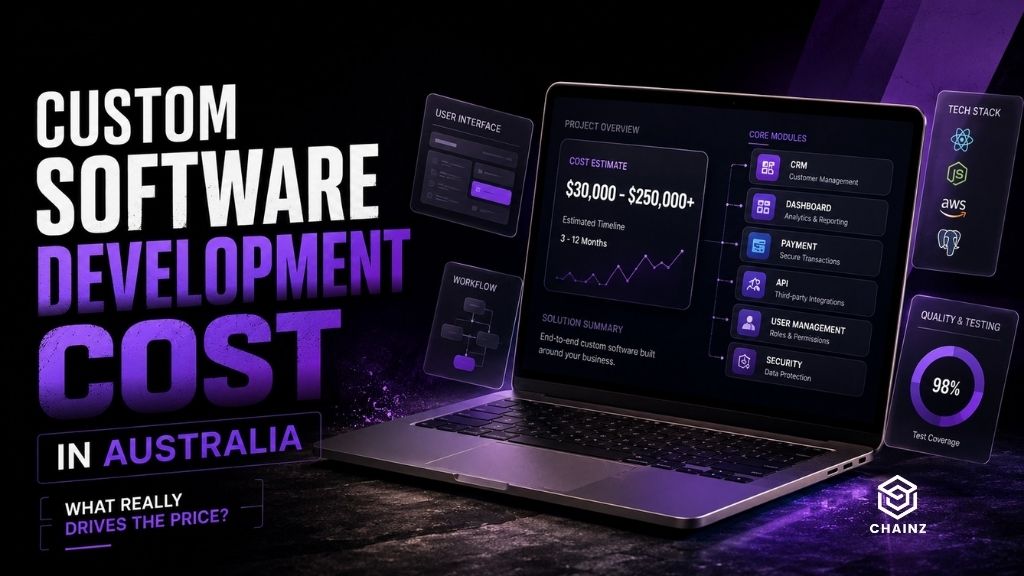
The custom software development cost in Australia typically ranges from $30,000 for a focused application to $250,000 or more for a complex enterprise platform. But that range, on its own, is almost useless — because the real number depends entirely on scope, complexity, and how the project is run. Two businesses can ask for “a custom app” and get quotes that differ by a factor of five, both of them honest.
This guide explains what actually sits behind those numbers: where your budget really goes, what drives the price up, why the cheapest quote is often the most expensive in the end, and how to get an estimate you can trust.
Custom Software Development Cost in Australia: The Ranges
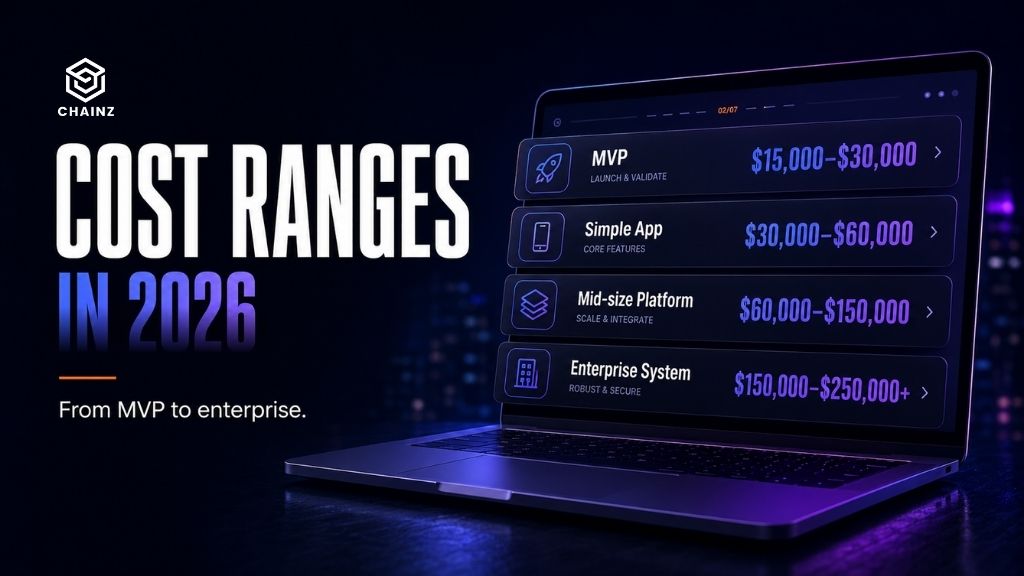
Here’s a realistic 2026 picture for the Australian market, organised by project size:
| Project type | Typical cost (AUD) | Timeline |
|---|---|---|
| Simple application (single purpose, limited integrations) | $30,000 – $60,000 | 6–12 weeks |
| Mid-size platform (multiple features, integrations, user roles) | $60,000 – $150,000 | 3–6 months |
| Complex / enterprise system (high scale, security, many integrations) | $150,000 – $250,000+ | 6–12 months |
| MVP (smallest viable version to validate an idea) | from $15,000 | 6–10 weeks |
These bands reflect what specialist development teams quote across Sydney, Melbourne, and Brisbane. A quote far below the relevant band usually signals one of three things: the scope has been underestimated, the work will be done by juniors, or the real costs will arrive later as “change requests.”
Where Your Budget Actually Goes
Most pricing guides give you a number. Fewer show you where it goes — which is the part that helps you judge whether a quote is fair. A typical custom software project breaks down across five phases:
| Phase | Share of budget | What it covers |
|---|---|---|
| Discovery & planning | 10–15% | Defining scope, architecture, and requirements |
| UI/UX design | 15–20% | How the software looks and works for users |
| Development (build) | 40–50% | Writing the actual software |
| Testing & QA | 15–20% | Making sure it works reliably under real conditions |
| Deployment & handover | 5–10% | Launching, documentation, and transfer |
When a quote skips discovery or allocates almost nothing to testing, that’s a warning sign. Software that’s never properly tested doesn’t save you money — it moves the cost to after launch, when bugs hit real users and fixes cost more.
What Drives the Cost Up
Five factors influence the custom software development cost in Australia more than anything else:
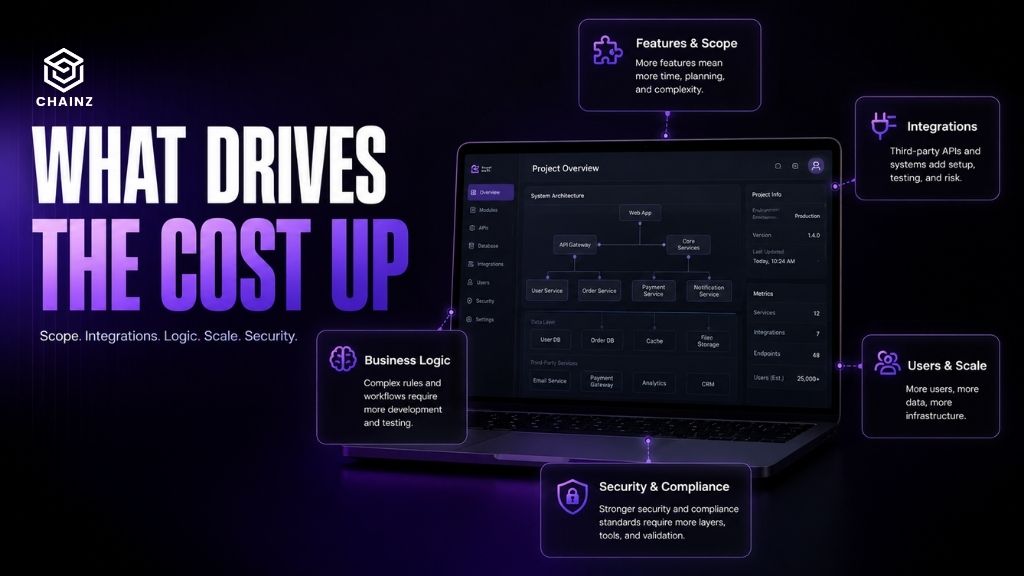
1. Scope and feature count. Every feature adds design, build, and testing time. The single biggest driver of cost is simply how much the software needs to do.
2. Integrations. Software that connects to other systems — payment gateways, your CRM, accounting tools, third-party APIs — costs more than a standalone app, because each connection must be built and tested.
3. Complexity of the logic. A simple data-entry tool is cheap. Software with complex business rules, real-time processing, or AI features sits at the top of the range. If AI features are part of your build, our guide to AI agent development costs in Australia breaks those out separately, including the ongoing running costs.
4. Number of users and scale. Software for ten internal users is engineered differently from a platform serving hundreds of thousands. Scale demands more robust architecture.
5. Security and compliance. Applications handling sensitive or personal data must meet the Australian Privacy Act and Australian Privacy Principles — adding encryption, access controls, and audit requirements to the build.
Fixed-Price vs Time-and-Materials: Which Costs You More?
This choice quietly shapes your final bill, and most guides skip it. Each model has a place — and a trap.
Fixed-price means you agree a set cost for a defined scope. It feels safe, and it’s ideal when requirements are genuinely clear. The trap: to protect against uncertainty, providers price in a risk buffer — so you often pay more for the certainty. And anything outside the original scope becomes a change request, often at a premium.
Time-and-materials means you pay for the work actually done. It’s flexible and fairer when requirements will evolve — which, in software, they almost always do. The trap: without a disciplined partner and clear milestones, costs can drift.
For most custom software, a hybrid works best: a fixed-price discovery phase to define scope tightly, then a time-and-materials build with clear sprint-by-sprint visibility. You get a firm foundation without paying a heavy buffer for guesses about an unknowable future.
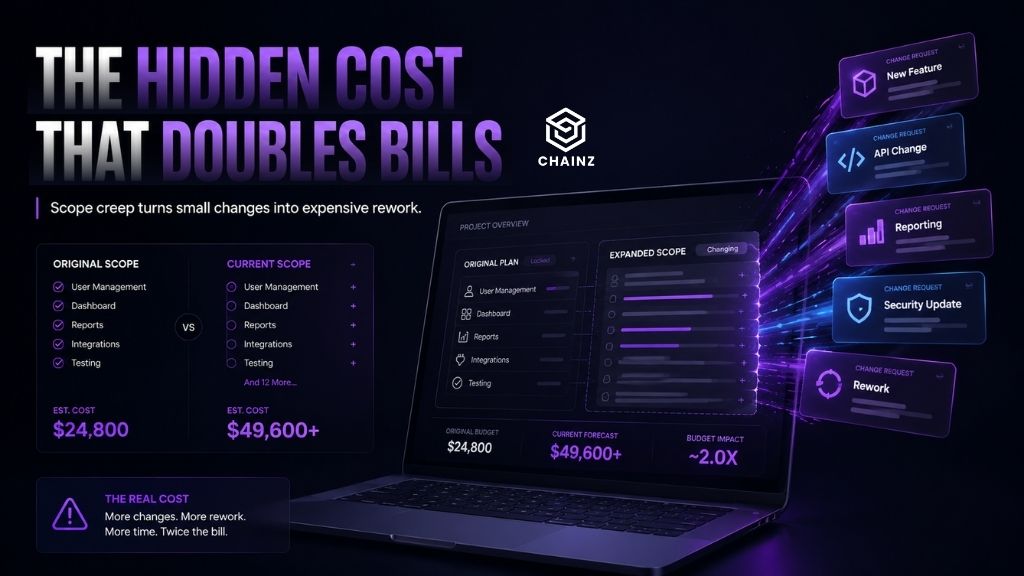
The Hidden Cost That Doubles Bills: Scope Creep
The most common reason a project runs over budget isn’t a bad quote — it’s scope creep. Features get added mid-build, “small” changes accumulate, and the original estimate quietly becomes fiction.
Scope creep isn’t always the client’s doing, either. A vague initial scope almost guarantees it. The protection is a tight, written discovery phase before development starts — one that defines exactly what’s being built, what isn’t, and how changes will be priced. The hour spent agreeing scope upfront saves ten spent arguing about it later.
Why the Cheapest Quote Rarely Wins
When quotes vary wildly, the lowest one is tempting. It’s also where the most expensive projects often begin. A suspiciously low quote usually means one of the following: the scope has been underestimated and the gap will arrive as change requests; the work will be done by junior developers and reworked later; or testing has been trimmed, pushing the cost to post-launch bug fixing.
The total cost of ownership matters more than the build price. Custom software also carries ongoing maintenance — typically 15–20% of the build cost per year for updates, security patches, and support. A cheap build that’s poorly architected costs far more to maintain than a well-built one. The right question isn’t “who’s cheapest to build?” It’s “what will this actually cost me over three years?”
How ChainZ Prices Custom Software
We price for clarity, not surprises. Every fixed-scope project starts with a written scope document agreed before a line of code is written — so you know exactly what you’re getting and what it costs. Where requirements will evolve, we run transparent sprint-by-sprint development with weekly demos, so you see progress and spend in real time rather than discovering both at the end.
You can see our software development services for how we structure projects, or read our companion guide on how much it costs to build an MVP in Australia if you’re validating an idea before a full build.
Want a realistic number for your project — not a vague range? Send us a short description of what you’re trying to build. We’ll come back with a ballpark estimate and an honest view of the scope, with no obligation to go further. It’s the fastest way to replace guesswork with a figure you can plan around. Get a ballpark estimate from ChainZ
How much does custom software development cost in Australia?It typically ranges from $30,000 for a simple application to $250,000+ for a complex enterprise system. A minimum viable product (MVP) can start from around $15,000. The final cost depends on scope, integrations, and complexity.
Why do custom software quotes vary so much?Because “custom software” covers everything from a single-purpose tool to an enterprise platform. Differences in scope, integrations, scale, and who does the work can make two honest quotes differ by five times or more.
Is fixed-price or time-and-materials better?Fixed-price suits projects with clear, stable requirements but often includes a risk buffer. Time-and-materials suits evolving requirements but needs a disciplined partner. A hybrid — fixed-price discovery, then time-and-materials build — works best for most projects.
What ongoing costs come with custom software?Maintenance typically runs 15–20% of the build cost per year, covering updates, security patches, and support. Budgeting for the three-year total cost of ownership gives a truer picture than the build price alone.
How can I avoid going over budget?Insist on a tight, written discovery phase before development starts. Most budget overruns come from scope creep caused by a vague initial scope — defining exactly what’s in and out upfront is the best protection.
Is the cheapest quote a good idea?Rarely. A very low quote often means underestimated scope, junior developers, or trimmed testing — costs that resurface later. The total cost over three years matters more than the lowest build price.